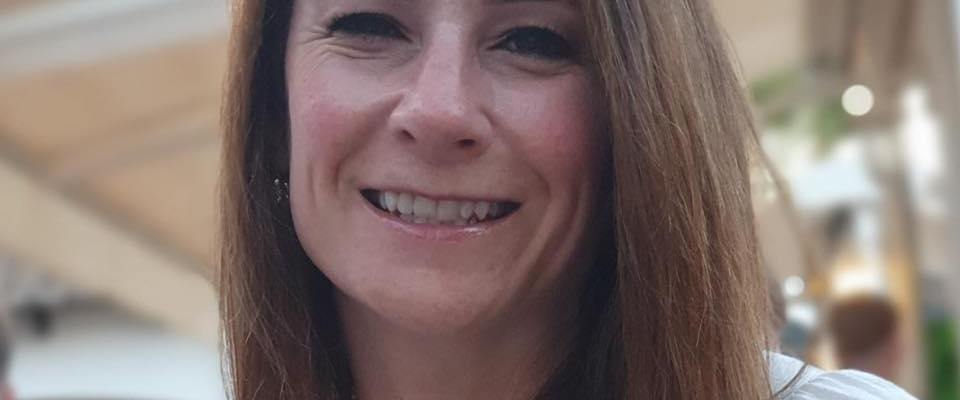

Today I’m joining the blog tour for Saving The Good News Gazette. I’m sharing my Q&A with the author with thanks to Rachel Gilbey at Rachel’s Random Resources for inviting me on the tour and to Jessie Wells for answering my questions!
Have you always wanted to write?
Absolutely. I don’t think there was a time, after I learnt to write at primary age, when I was ever not writing. I always remember my fourth-year junior teacher, Mrs Pendleton, telling me that I would be a writer, and with that the dye was cast. I’ll never know whether I would have been a writer without her declaration that it would be so, but she definitely instilled a belief in me that I could do it.
What were your previous jobs? Have they helped you with your writing process?
I spent the first couple of decades of my career in journalism, latterly combined with PR, and that career provided a huge amount of inspiration for the books that have followed. It also made me very comfortable typing away at a keyboard, and resulted in me becoming able to type very quickly, but it didn’t mean that I could automatically write novels. I had to learn how to do that from scratch and, believe me, it is a completely different artform to writing a news story.
What was your inspiration for Saving The Good News Gazette?
Saving The Good News Gazette is the second book in The Good News Gazette series, with the first novel telling the tale of Zoe, a single mum who decides to set up a good news newspaper when she’s made redundant from her journalism job.
In the first book, we see this move leading to her taking on a local property developer who wants to demolish the local shopping centre while also developing a growing friendship with her childhood crush, the local football coach.
However, by book two, things have progressed quite significantly. This time, the fortunes of her failing newspaper become entwined with that of a derelict movie theatre, when she strikes a deal with her antagonist that sees them work together as they attempt to save both.
As you can see, there’s a clear theme of community running through the books. I’d had the pitch for The Good News Gazette accepted by my publisher, One More Chapter, in 2019, before anyone had ever heard of Covid, but didn’t manage to get particularly far with the book until lockdown kicked in. During that time, community and the kind acts from the people within it became more important than ever before, and that theme is reflected in the books.
How do you construct your characters? Do they have traits of people you know?
I start off with a very basic idea of who they are – what their names are, what they look like, a bit about their background, and I jot it all down. However, just as it takes time to get to know people in real life, my characters don’t arrive as fully formed characters. Instead, they grow and become more three-dimensional as the story goes on, and as I learn more about them, I incorporate it into the book.
What does your writing process look like? Are you a plotter or a pantser?
I’m definitely a plotter. I tried the pantser method while I was writing The Good News Gazette and learnt very early on that if I tried to rely on that technique, there was a good chance the book would never make it to publication.
How did you research? Did you enjoy it?
There are a number of ways in which I do research, depending on the type of story I want to write. For the first book, for example, I interviewed Rebecca Keegan, the founder and editor of Good News Liverpool, to understand some of the specific challenges of publishing a newspaper that deals in only good news as an independent publisher. I also sought the advice of key organisations in order to ensure I was accurately reflecting some of the characters in the book.
Saving The Good News Gazette, on the other hand, required a lot of internet research on other similar cinemas that had been refurbished. I do enjoy it, and I find it absolutely necessary in order to make sure that my stories are both believable and accurate. The research itself also sometimes provides me with ideas for subplots and elements that probably wouldn’t have come about otherwise.
Who are your favourite writers? Are you influenced by them?
When it comes to good writing nowadays, we’re absolutely spoilt for choice, which makes it difficult to pinpoint just a few authors.
However, there are some who it would be difficult not to be influenced by. Marian Keyes, for example, is a real Queen of her genre. Beth O’Leary is a brilliant writer whose characters have me laughing out loud. And, of course, who doesn’t love Taylor Jenkins Reid?
If you could invite three people, living or dead, to dinner, who would they be and why?
My lovely, late Nan and Grandad would have the first two places. My Grandad fought in the Second World War and, at one point, I believe that my Nan ran off to be with him. My Grandad protected us from most of what he’d seen, and I never really spoke to my Nan about the War and how it affected her. I’d love to speak to them adult to adult and try and understand what they experienced. And also tell them how much I miss them.
Taking up the third place at the table would be Gordon Ramsay, as hopefully that would mean I wouldn’t have to cook.
Who would play the main character/s in a film version of Saving The Good News Gazette?
I’ve wondered this myself, and have come to the conclusion that the only workable solution would be to cast Ryan Gosling and myself as the male and female leads. It would be a tough job but if someone has to do it, I’m prepared to step up to the task.
What do you like to do in your spare time?
What’s spare time? ‘-)
What is next for you?
Book three, which is currently in process.
Favourites:
Book? Pride & Prejudice
Film? La La Land
Band/Singer? Tonight, it’s The Shires, but this changes on a day-to-day basis.
TV show? I’ve just caught up with all the episodes of Emily in Paris, and loved it.
Colour? Blue
Place? Majorca or The Lake District
Biscuit? Lotus Biscoff.
***
Saving The Good News Gazette is available from Amazon.
You can follow the rest of the blog tour here:

 Portable Magic