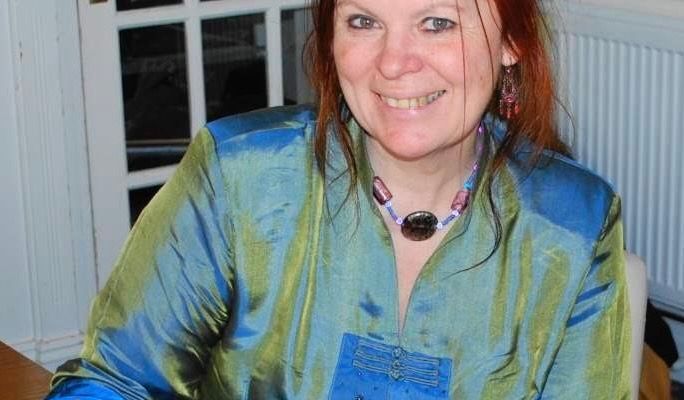
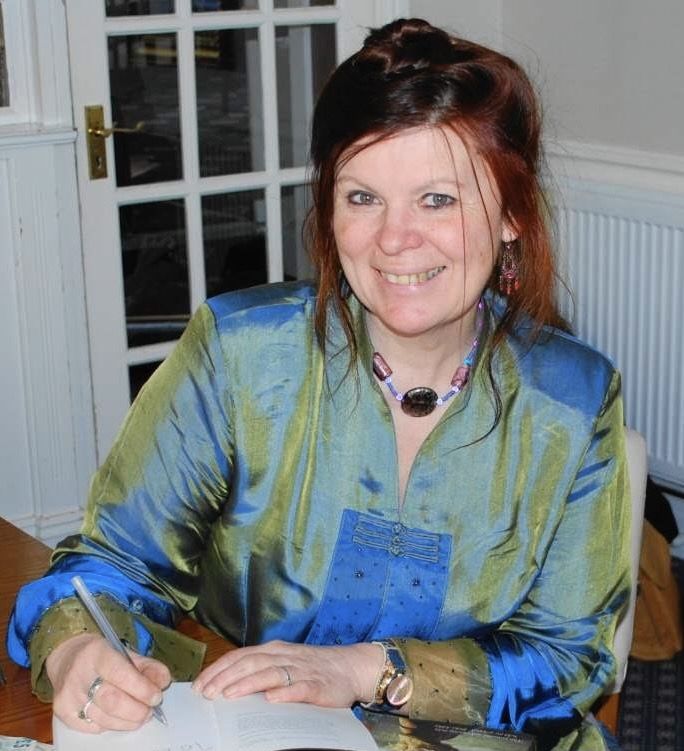
Today it’s my turn on the blog tour for The Secret Daughter Of Venice. I’m sharing a guest post written by the author with thanks to Rachel Gilbey at Rachel’s Random Resources for inviting me on the tour and to Juliet Greenwood for writing her guest post!
Blurb:
The paper is stiff and brittle with age as Kate unfolds it with trembling hands. She gasps at the pencil sketch of a rippling waterway, lined by tall buildings, curving towards the dome of a cathedral. She feels a connection deep in her heart. Venice.
England, 1941. When Kate Arden discovers a secret stash of drawings hidden in the pages of an old volume of poetry given to her as a baby, her breath catches. All her life, she has felt like an outsider in her aristocratic adoptive family, who refuse to answer any questions about her past. But the drawings spark a forgotten memory: a long journey by boat… warm arms that held her tight, and then let go.
Could these pictures unlock the secret of who she is? Why her mother left her? With war raging around the continent, she will brave everything to find out…
A gripping, emotional historical novel of love and art that will captivate fans of The Venice Sketchbook, The Woman on the Bridge and The Nightingale.
Guest Post:
Writing about women artists
I loved writing about women artists in The Secret Daughter of Venice. The story revolves around two painters. In WW2 Venice, Sofia is a woman who was briefly famous as a painter and illustrator during her youth at the time of WW1, but now feels that she threw it all away for love, as well as being easily manipulated by the ambitions of others. In WW2 Cornwall, Kate is a passionate, driven young painter, who has spent her life battling the expectation of her time that her only way of living a fulfilling life is to marry a man who will financially support her, and spend her every waking hour supporting his ambitions and making his life comfortable. Although Kate has been brought up in a very English faded Tudor mansion, she is aware of being torn from her past life in Italy, on the beautiful coastline near to Naples and the ruins of Pompeii. It’s that trauma that makes her wary, and quick-witted and far more aware that the people around her – including some of the young men – don’t always have her best interests at heart.
I loved writing Kate. She has so many of the dilemmas any women with an ambition to be creative still struggles with, trying to balance the demands of family, of being expected to undertake the bulk of domestic responsibilities that are still largely unseen and unrecognised as taking up time and energy. She is also struggling with the fact that in the mid-twentieth century women artists were not really taken seriously. When I was researching the story, it struck me how little I knew about female artists. When I lived in London, the artists I saw in galleries were overwhelmingly male, and the same with the Louvre in Paris. I’ve always loved the paintings of Gwen John and Laura Knight, and more recently Artemisia Gentileschi. But it was only when I was researching that I realised how little I knew of the paintings of impressionist Berthe Morisot, as well as Virginia Woolf’s sister, Vanessa Bell, and the American painter Mary Cassatt.
As a writer who has struggled to keep a roof over my head while trying to get to the point where I can make some kind of living, I really identified with Kate. As a woman it’s difficult to be ‘selfish’, particularly as everything we are taught still tends to tell us to put the needs of others first, and leaves us wrestling with self-doubt. As Kate came alive as a character, I was glad that she remained so very determined to stick to her guns and to follow her star, constantly analysing and working out how to follow her dreams rather than meekly following what was best for others.
As Kate’s story took shape, the most important of those choices was of course that of a romantic partner. After her frustration at the obstacles put in her way of following her talent, it’s the thing she struggles with most. As a woman of her time, Kate is all too well aware that, with divorce a social and financial disaster for a woman, she will only have one shot at marriage. She is also certain that the mother she is trying to find did not give her up willingly to be never seen again, something she doesn’t want for her own children. So I liked Kate for her dilemma’s, her wariness about falling easily in love, determined to take even romance on her own terms, and what is best for her and her future children. It’s a passionate choice, one that isn’t without its own heartache, but I cheered her on all the way – as I hope my readers will too!
***
The Secret Daughter Of Venice is available from Amazon.
You can follow the rest of the blog tour here:
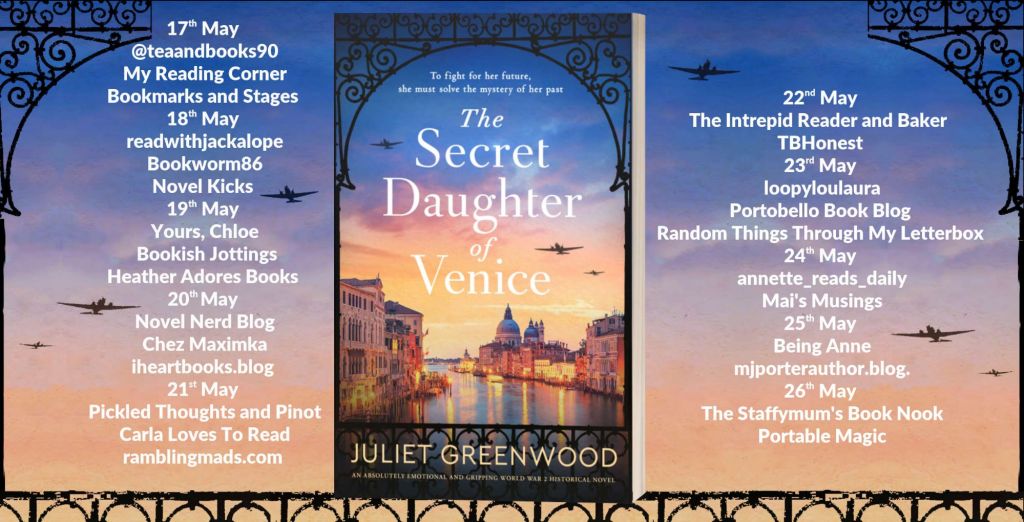
 Portable Magic