
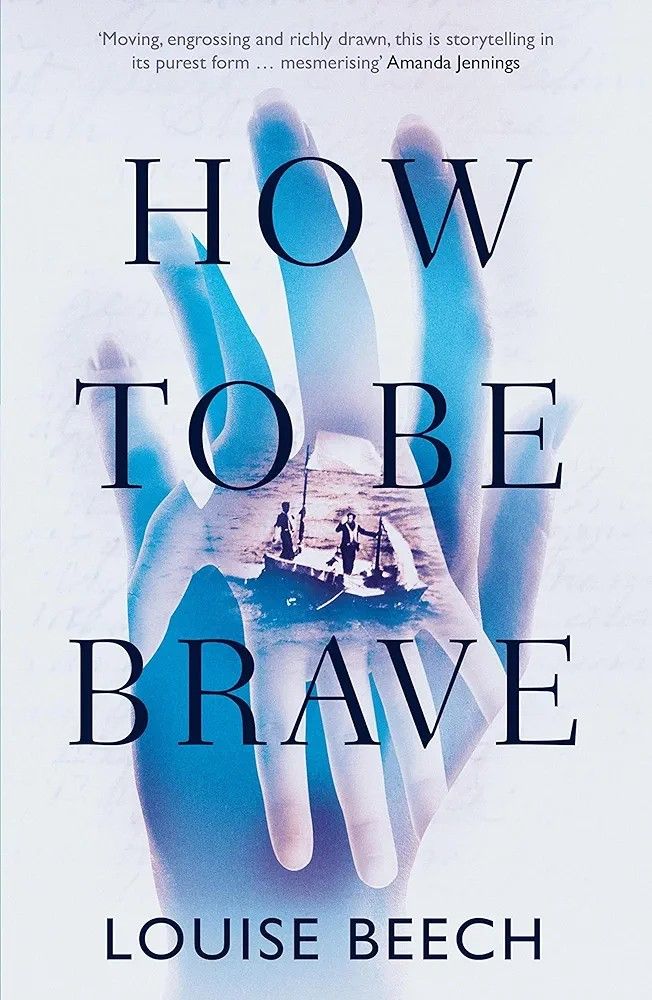
Blurb:
All the stories died that morning … until we found the one we’d always known.
When nine-year-old Rose is diagnosed with a life-threatening illness, Natalie must use her imagination to keep her daughter alive. They begin dreaming about and seeing a man in a brown suit who feels hauntingly familiar, a man who has something for them.
Through the magic of storytelling, Natalie and Rose are transported to the Atlantic Ocean in 1943, to a lifeboat, where an ancestor survived for fifty days before being rescued.
Poignant, beautifully written and tenderly told, How To Be Brave weaves together the contemporary story of a mother battling to save her child’s life with an extraordinary true account of bravery and a fight for survival in the Second World War. A simply unforgettable debut that celebrates the power of words, the redemptive energy of a mother’s love … and what it really means to be brave.
Review:
If you’ve read my reviews before, you’ll know how much I love Louise Beech – both the person and her writing. It is to my absolute shame that I had not yet got around to reading How To Be Brave. It’s the author’s debut, and whilst I can see that she was less confident at the beginning of her writing journey, she has still written a really touching and emotional story.
Louise Beech is brilliant at creating characters to whom the reader can relate and with whom they can empathise. All the characters in How To Be Brave, including the more minor characters are really well developed and I loved getting to know them. I was really keen to know what would happen to them and hoped from the beginning that they would all get the answers they were looking for.
At the beginning of How To Be Brave, Louise Beech makes it clear that she has drawn on her own personal story in the novel. I love that she felt able to share this story with us, and using her own experience really helps to make the story come alive for readers. The chapters alternate between Colin’s story during World War II and Rose and Natalie’s story in the present day. I found both stories fascinating and I never felt, as I often do with novels with multiple timelines, that one was more engaging than the other. I was completely invested in both parts of the story, transported to the different locations by the author’s wonderfully precise use of language.
How To Be Brave has been adapted for the stage and I’m looking forward to seeing it next month. The story definitely lends itself to stage production and I’m interested to see how the production team bring it to life.
How To Be Brave is available from Amazon.
 Portable Magic
I hope you enjoy the stage version Kate.
LikeLike